The main differences between optical microscopes and electron microscopes are as follows:
Resolution:
The resolution of optical microscopes is limited by the physical properties of light, and generally only objects larger than 0.2 microns can be observed.
The resolution of electron microscopes is much higher than that of optical microscopes, and objects at the nanometer level can be observed, and even single atoms can be seen.
Working principle:
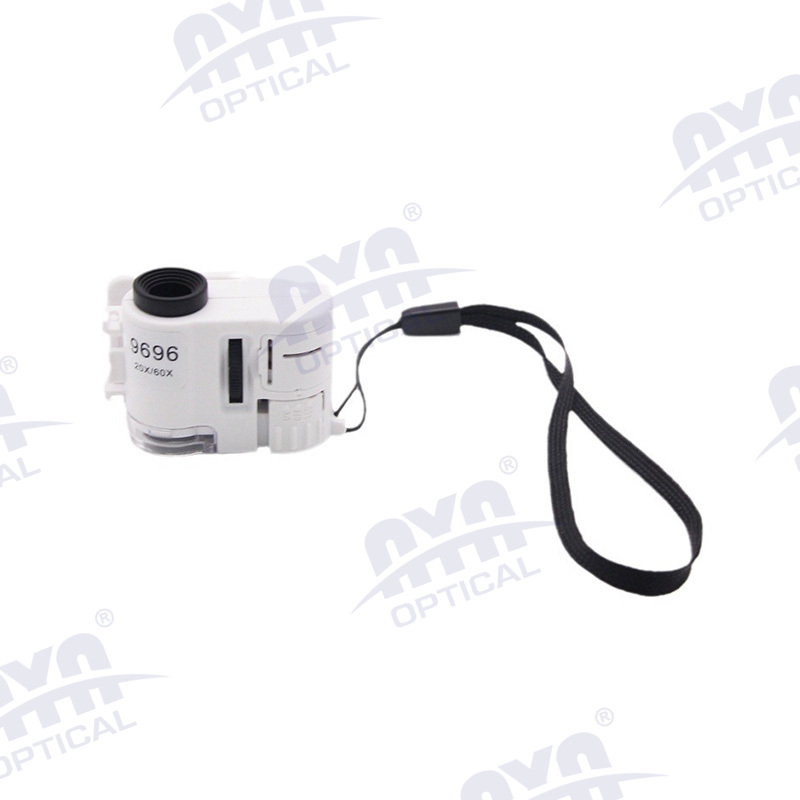
Optical microscopes use visible light and a set of lenses to magnify and focus objects.
Electron microscopes use electron beams instead of visible light, and electromagnetic lenses instead of optical lenses. The electron beam passes through the sample, is focused and magnified by the electromagnetic lens, and finally forms an image on the fluorescent screen.
Sample requirements:
Optical microscopes can observe living or fixed samples, such as cells, tissues, etc., and sample preparation is relatively simple.
Samples for electron microscopes must be thin slices or transparent to electrons. Samples need to be specially processed and stained to enhance electron scattering, thereby generating clearer images.
Operation and maintenance:
Optical microscopes are simple to operate, easy to maintain, and low in cost. They are widely used in teaching and basic research.
The operation and maintenance of electron microscopes are relatively complex, requiring professional personnel to operate and maintain them. At the same time, they are expensive and are generally only used in large research institutions or professional laboratories.
Impact on biology:
Optical microscopes are important tools for many basic research and educational activities, such as observing cell morphology, movement, division, and other life activities.
The emergence of electron microscopes has greatly promoted the progress of biological research. Scientists can observe the ultrastructure of cells, such as the detailed structure of macromolecular complexes such as organelles and proteins.
Components and light sources:
Optical microscopes are mainly composed of components such as objective lenses, eyepieces, reflectors, and condensers, and the illumination source is visible light.
Electron microscopes are composed of three parts: the tube, the vacuum device, and the power cabinet. The illumination source is the electron flow emitted by the electron gun.
In summary, there are significant differences between optical microscopes and electron microscopes in terms of resolution, working principle, sample requirements, operation and maintenance, impact on biology, components, and light sources.



 English